

The University of Plymouth team ventured to the stunning Penhale Dunes on the 7th November to lay the groundwork for an exciting experiment investigating wind-driven sediment (sand) transport across the beach-dune system. Though the wind conditions weren’t ideal—blowing offshore instead of onshore—this visit gave them the opportunity to test their equipment and scout the site.
The Dynamic Dunescapes project instigated the creation of V-shaped notches to restore natural sand movement and create bare sand habitats for biodiversity. MS4S is now using these notches to continue to study coastal dynamics. These notches act as wind channels, accelerating airflow and making them ideal for studying the movement of sand. The experiment will study dune dynamics and how sediment moves through the notches compared with movement through vegetated areas. The researchers will set up a sediment trap to collect wind-driven sand. Each trap features a sail that rotates to align with the wind, funnelling grains into collection tubes that can be used for analysis.
Alongside the sand traps, they tested Kestrel wind sensors, which measure wind speed and direction. These sensors were mounted on posts within the notches and on portable tripods in vegetated areas to provide a direct comparison between locations.
Timing is everything for in these experiments, as they need strong, onshore winds and dry conditions to capture sediment transport from the beach onto the dune. With everything in place, they are ready to seize the opportunity when strong onshore winds and dry conditions arrive.
-
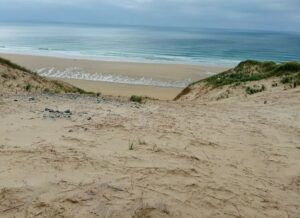
- Penhale notches
-
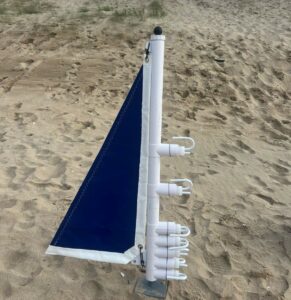
- Sediment trap
-
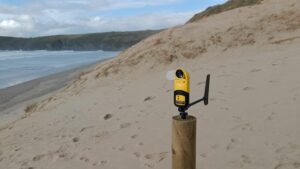
- Wind Kestrel


Making Space for Sand News and Events
We like to keep supporters of our project well informed of project progress and developments. We also want to share news of events which are happening and have happened and celebrate coastal community involvement.
Sign up to Making Space for Sand
If you would like to get involved in helping to make dunes more resilient and biodiverse, want to help develop coastal adaptation and emergency plans or just want to know more about what the project is learning about coastal change, please click here: