The Making Space for Sand project has supported partners South West Coastal Monitoring and Geography South West to develop a new GCSE geography resource pack exploring Cornwall and Devon’s dynamic coastal landscapes.
Using three detailed case studies, students investigate coastal landforms and coastal management approaches through real-world examples, maps, aerial imagery, photographs, historical records and contemporary data. The resources also help build GCSE-style geographical enquiry, evidence interpretation and revision skills while connecting learning to current coastal challenges.
- Lesson 1: Students explore coastal landforms at Trevose Head including headlands, bays, caves, stacks, blowholes, wave-cut platforms, beaches and sand dunes.
- Lesson 2: Students investigate different coastal management approaches, why Dawlish Warren is vulnerable, and the success and long-term future of management at the site.
- Lesson 3: Students explore sand dune regeneration, and how sand dunes can be protected and restored, using case studies from Widemouth Bay, Penhale and Porthtowan.
Together, these resources support key GCSE geography curriculum themes including:
- Coastal processes and landforms
- Coastal erosion and deposition
- Coastal management and engineering
- Physical and human factors affecting coastal environments
- Climate change and sea level rise
- Sustainable coastal management
- Geographical enquiry and interpretation of evidence
- Evaluation and decision-making
- Case-study knowledge and revision
To view or download the lessons please visit: Making Space for Sand: GCSE case studies – Geography South West
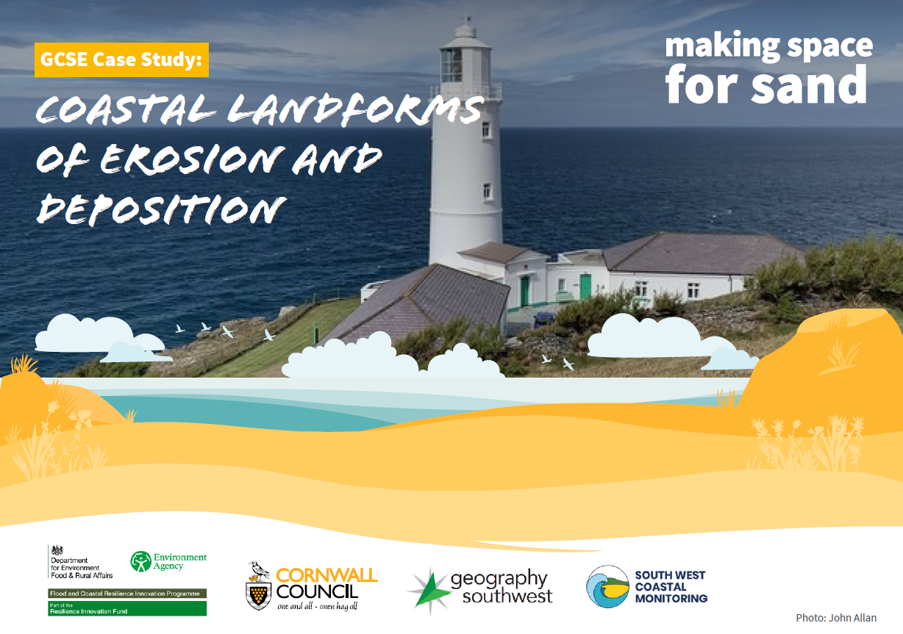
GCSE Resource Case Study 1
Making Space for Sand News and Events
We like to keep supporters of our project well informed of project progress and developments. We also want to share news of events which are happening and have happened and celebrate coastal community involvement.
Sign up to Making Space for Sand
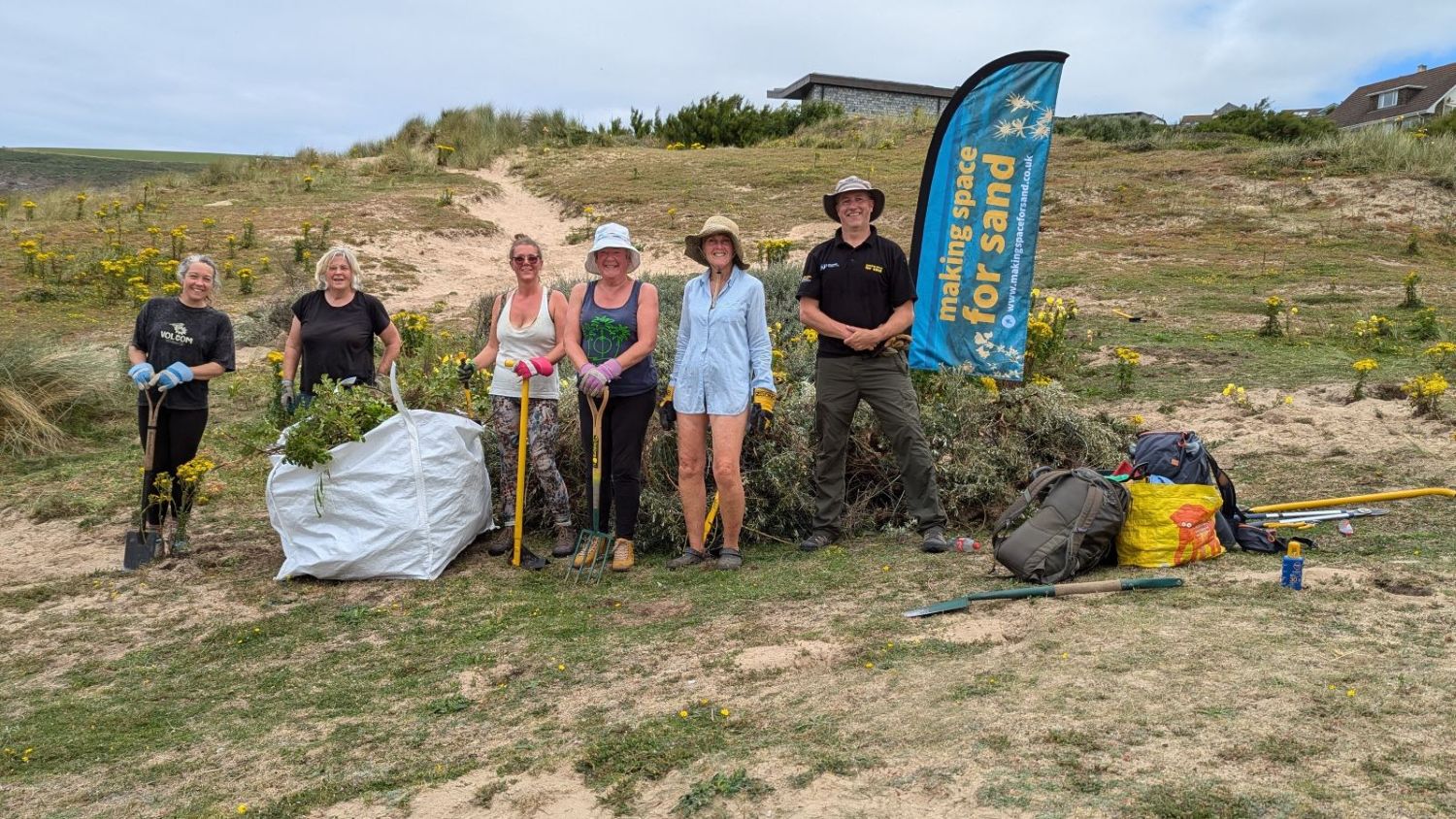
If you would like to get involved in helping to make dunes more resilient and biodiverse, want to help develop coastal adaptation and emergency plans or just want to know more about what the project is learning about coastal change, please click here: