

Researchers from the University of Plymouth, working on the Making Space for Sand (MS4S) project, are investigating how much sand is transported from beaches into dunes and how this contributes to dune growth and coastal resilience. Wind can carry dry sand inland, where vegetation and other surface features slow airflow and allow sediment to settle, gradually increasing dune volume. However, the amount of sand moved varies significantly between locations and over time. Sand transport depends on a combination of factors including wind speed and direction, sediment size, moisture levels, tidal conditions, beach shape, vegetation, and local weather, all of which influence how easily sand can be mobilised and transported.
To better understand these processes, researchers conducted a wind-driven sediment transport experiment at Mexico Towans near St Ives. They used anemometers to measure wind conditions, moisture probes to assess sediment dryness, saltation monitors to track when sand grains were moving, and sediment traps to directly measure the quantity of sand being transported. By combining these field measurements, the team can assess how environmental conditions affect sand movement. The data will be used to improve a computer model that estimates long-term sand transfer from beaches to dunes, helping researchers understand dune growth over months, years, and decades and providing valuable insights into coastal resilience.
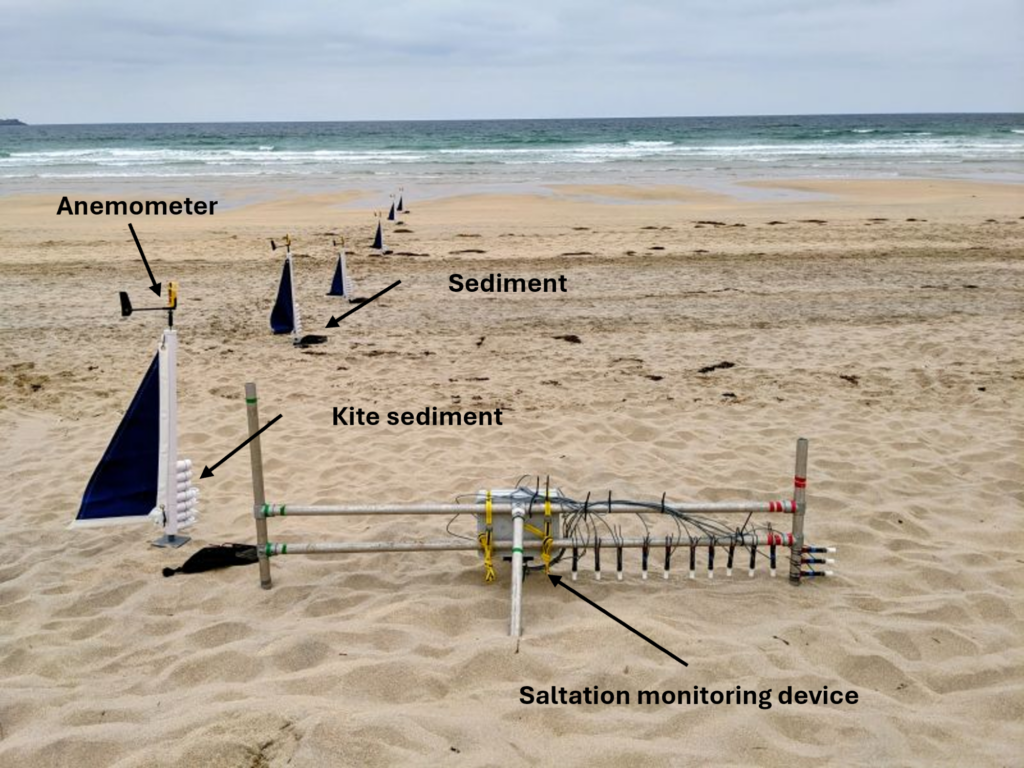
Sand Measuring and Trapping
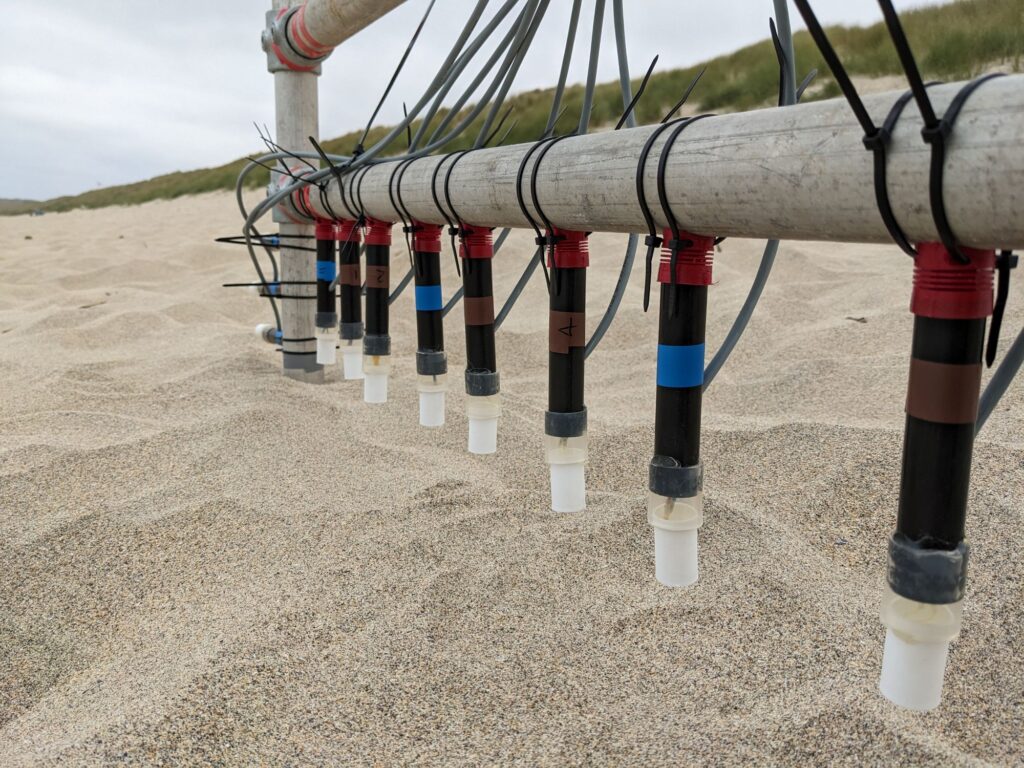
Sensors can detect when a sand grain hits the white element at the base of each probe

Making Space for Sand News and Events
We like to keep supporters of our project well informed of project progress and developments. We also want to share news of events which are happening and have happened and celebrate coastal community involvement.
Sign up to Making Space for Sand
If you would like to get involved in helping to make dunes more resilient and biodiverse, want to help develop coastal adaptation and emergency plans or just want to know more about what the project is learning about coastal change, please click here: