Project partners University of Plymouth hosted a Coastal Change Symposium on 9th and 10th of September on behalf of Making Space for Sand.
The event gave the team at University of Plymouth the opportunity to share the results of the data they have collected on behalf of the project and subsequent learning from this data. Several members of the team gave talks about their particular data collection methods and presented their results in engaging and thought-provoking visualisations.
The symposium was delivered over two half-day sessions. The first focused on how coastal data is collected, while the second explored how this data is being modelled and transformed into clear visualisations. These visualisations demonstrated how our coastline may change over time and highlighted the impact of sand movement on coastal landscapes and dune systems.
The delegates were also given a copy of the ‘Coastal Processes and Shoreline Change’ book compiled by the UoP on behalf of the project. The book is a compendium of 49 scientific papers reporting on shoreline dynamics and coastal processes in the South West over the last 20 years.
A huge, big thank you to the team at University of Plymouth for hosting this event. Below are some of the comments from the people who attended:
“The lessons learned section was awesome”
“The event highlighted the importance of uncertainty in future predictions and triggering ideas of how to present this in data sets”
“The data presented made me realise that coastal change is complex and each location is different”
-
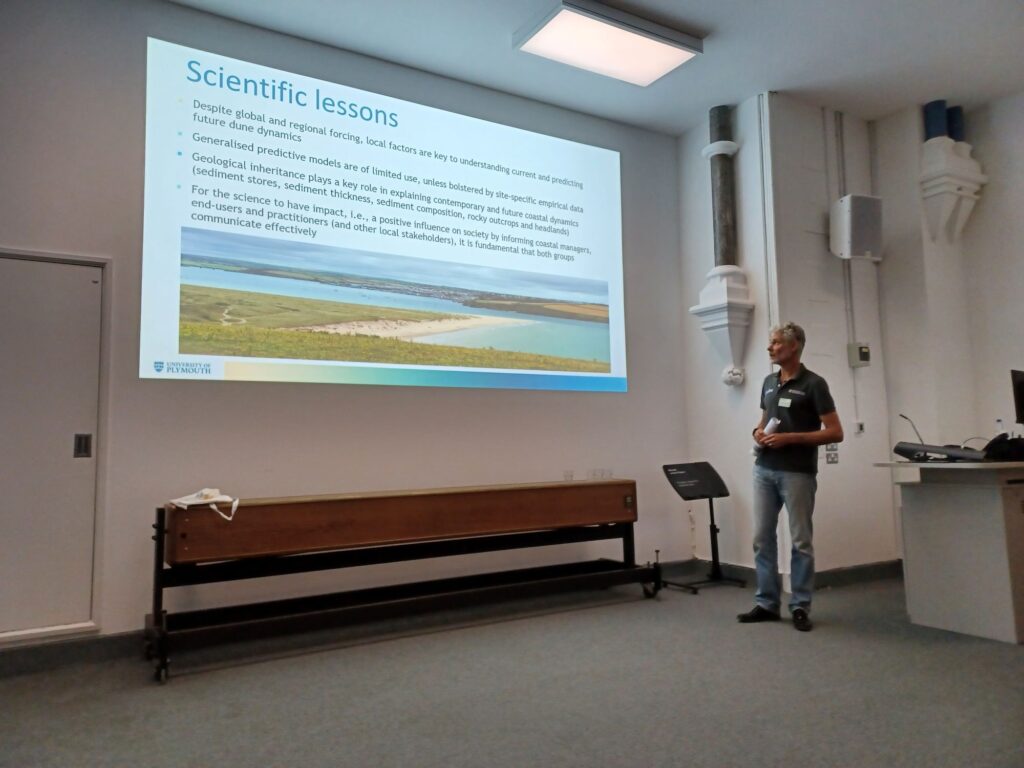
- Professor Gerd Masselink
-
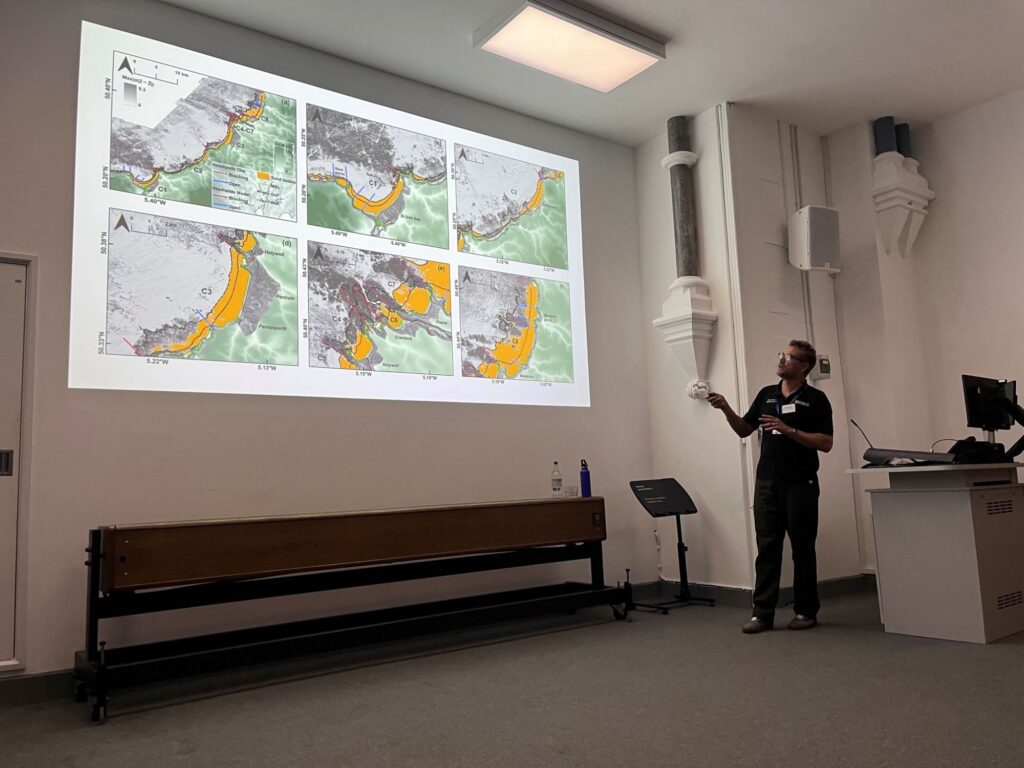
- Tim Poate Presentation
-
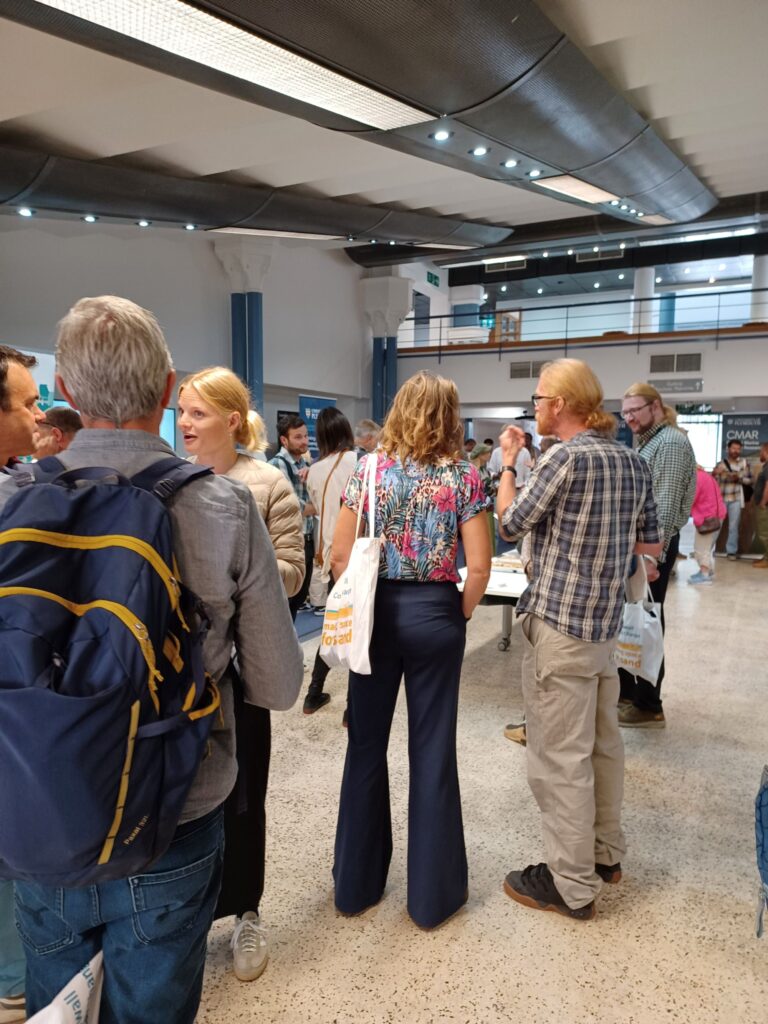
- A chance to chat
-
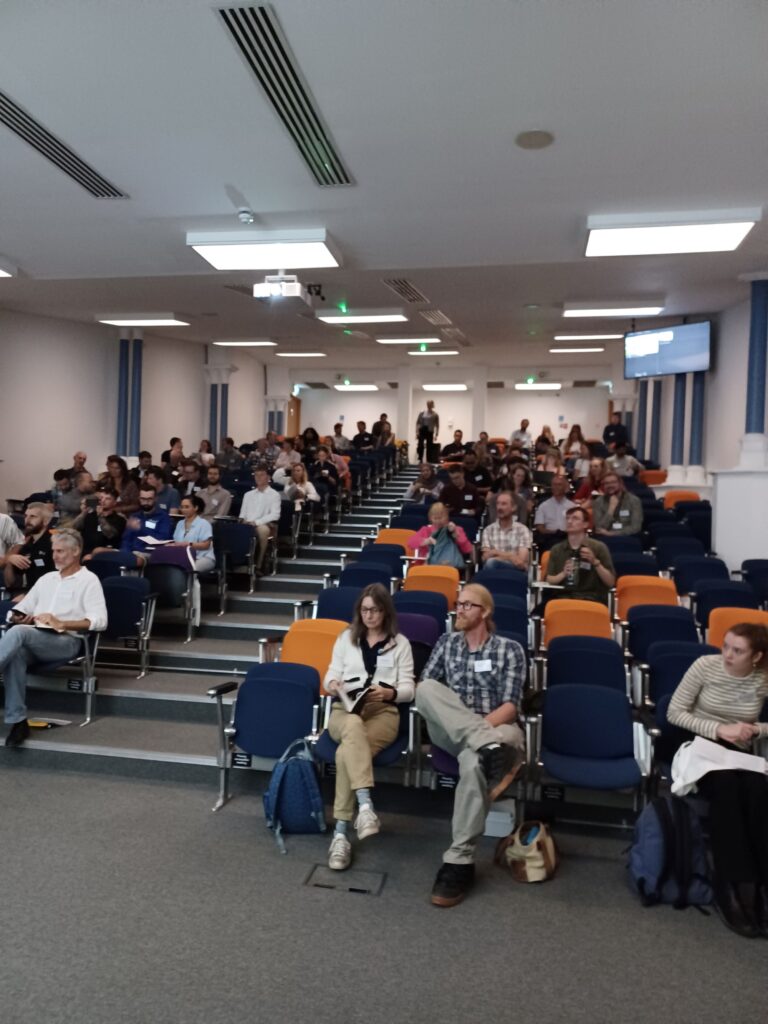
- Audience


Making Space for Sand News and Events
We like to keep supporters of our project well informed of project progress and developments. We also want to share news of events which are happening and have happened and celebrate coastal community involvement.
Sign up to Making Space for Sand
If you would like to get involved in helping to make dunes more resilient and biodiverse, want to help develop coastal adaptation and emergency plans or just want to know more about what the project is learning about coastal change, please click here: