

Our project partner, University of Plymouth, have been undertaking research about how some of our dunes have been over vegetated and this has restricted the movement of sand.
With ongoing residential, commercial, and industrial development along coasts, much of the active beach and dune areas from the mid-19th century have been overtaken by towns and villages, and many remaining areas are now heavily managed. At the same time, increasing urbanisation and tourism, intensified agriculture, and shifts in traditional farming practices have promoted vegetation growth, leading to dune stabilisation. Stabilised dunes eventually lose mobility, reducing their ability to respond to sea level rise and storm activity, making them less climate resilient.
The UoP team have collected historical records, WWII aerial photos, and modern satellite imagery across all MS4S sites to evaluate how these areas have changed over the past 150–200 years and investigate changes in vegetation cover of remaining active dune areas since the 2nd World War. These images will shortly be uploaded to the MS4S website in the ‘locations’ pages.
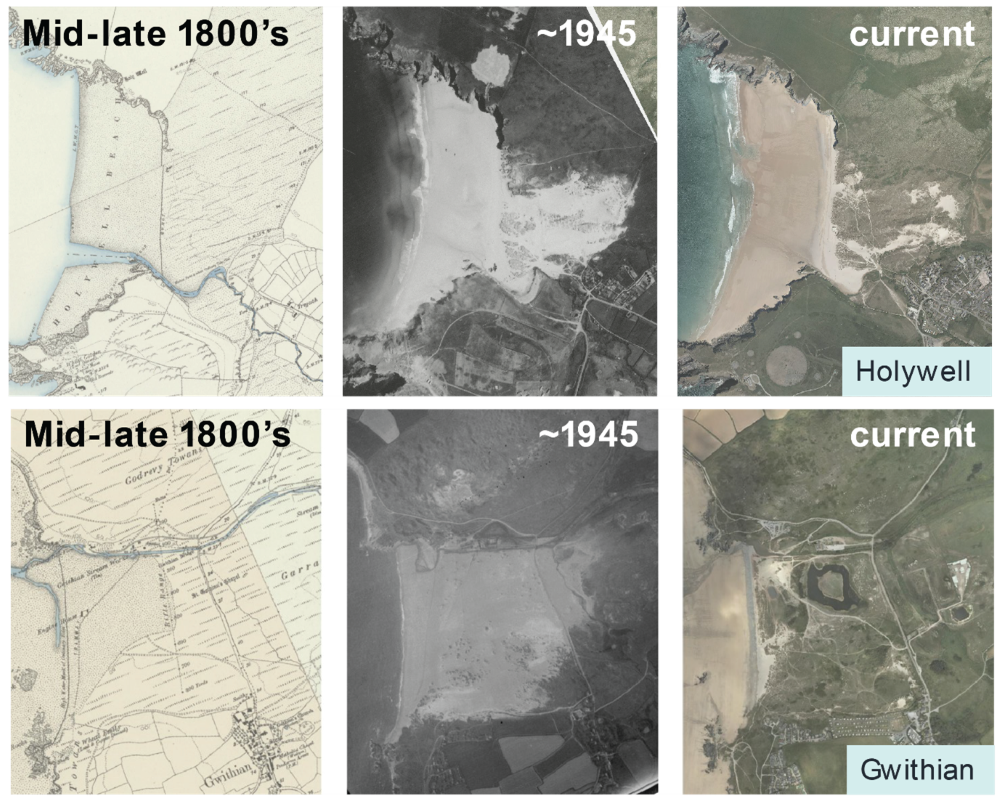
Examples of significant changes in dune vegetation cover at Holywell and Gwithian since the mid to late 1800’s.


Making Space for Sand News and Events
We like to keep supporters of our project well informed of project progress and developments. We also want to share news of events which are happening and have happened and celebrate coastal community involvement.
Sign up to Making Space for Sand
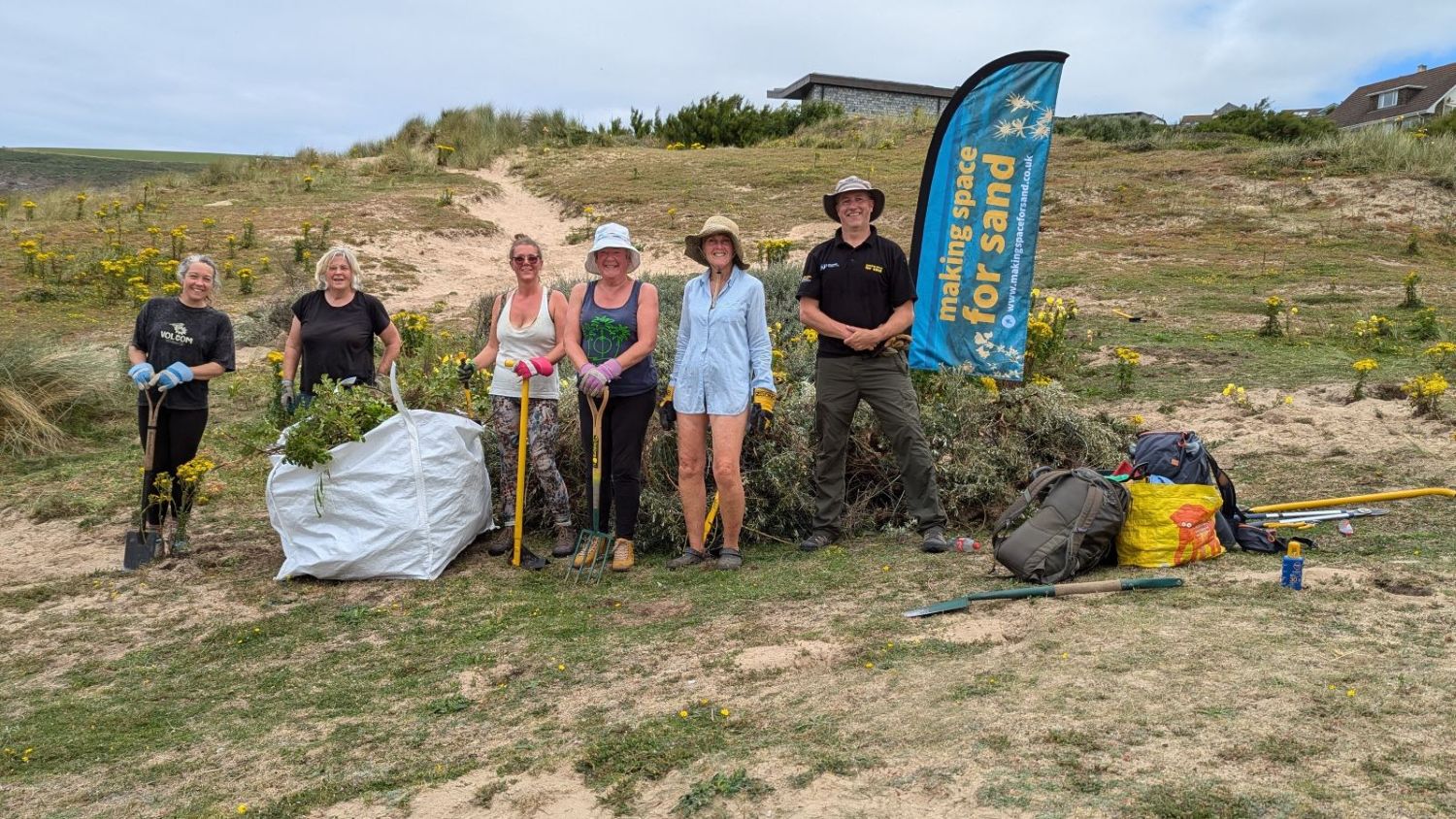
If you would like to get involved in helping to make dunes more resilient and biodiverse, want to help develop coastal adaptation and emergency plans or just want to know more about what the project is learning about coastal change, please click here: