
Gwithian Towans is a SSSI and local nature reserve, home to a range of specialised dune species. A threat to the dune grassland is the encroachment of invasive scrub and non-native plants such as a montbretia, which outcompete native species and reduce biodiversity.
Work has been undertaken recently to excavate and bury regions of scrub and non-native species to increase the quantity of bare sand and encourage the growth of native dune plants.
Selected regions of previously cut scrub and invasive species, including montbretia and cotoneaster, were removed by a 3-tonne mini excavator and buried in pits at least two metres deep on site to minimise nutrient utilisation from native dune plants. Material was buried as close as possible to the site of excavation, and the area left as bare sand. Excavated material remained at points of extraction for 24 hours to allow for reptile dispersal following the discovery of slow worms in a specific region.
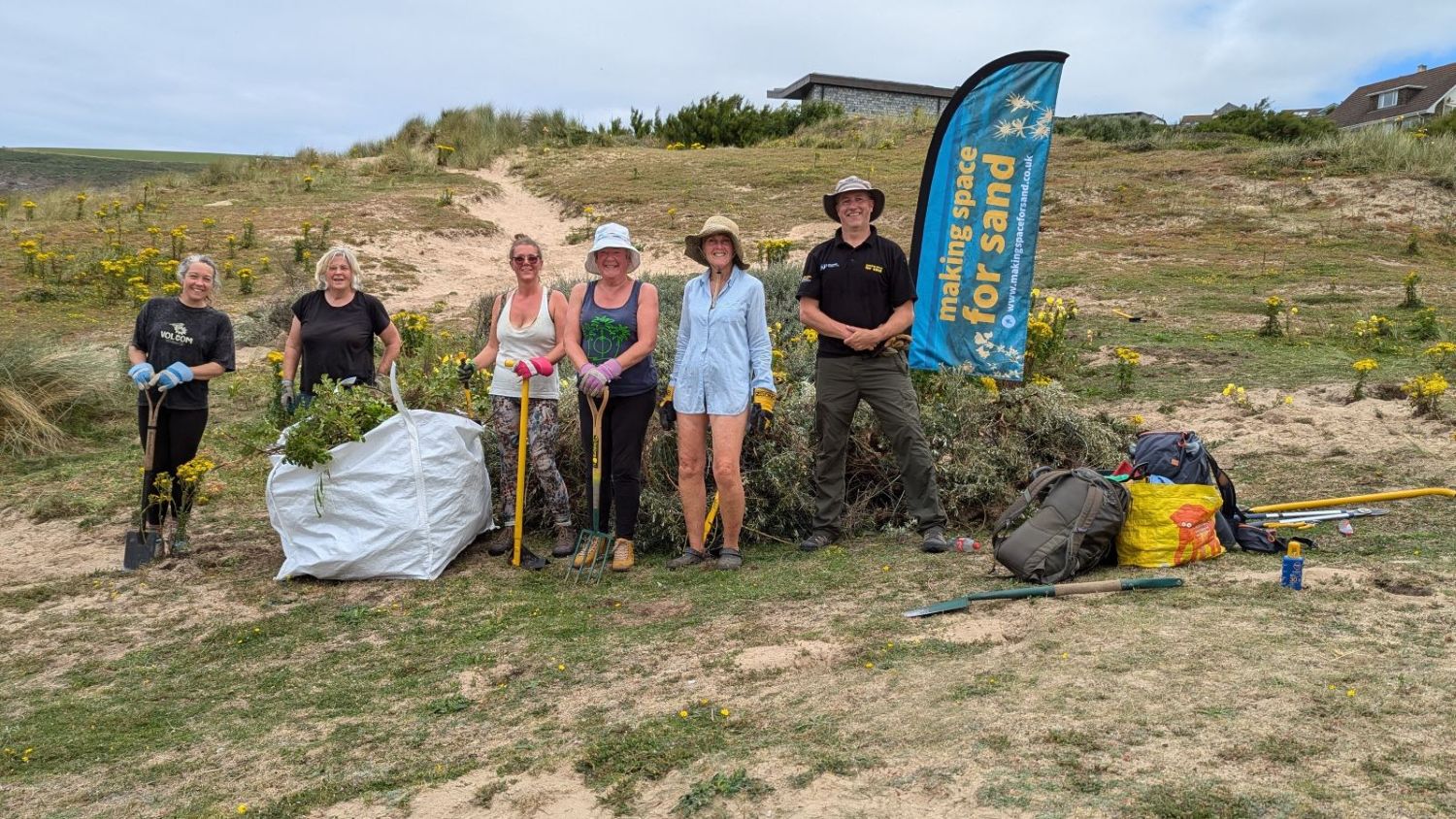
1072 square metres of bare sand was exposed; on-going monitoring will assess which species are re-establishing in these areas accompanied by the removal of any remaining roots and corms by the Friends of the Towans volunteers.
-
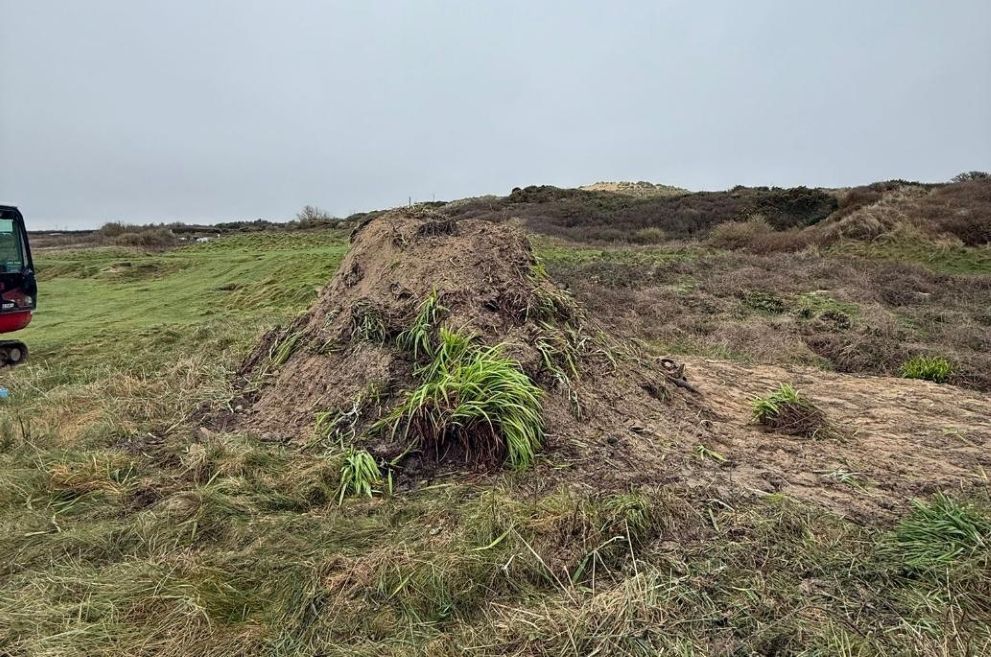
- Scrub Prior to Disposal
-
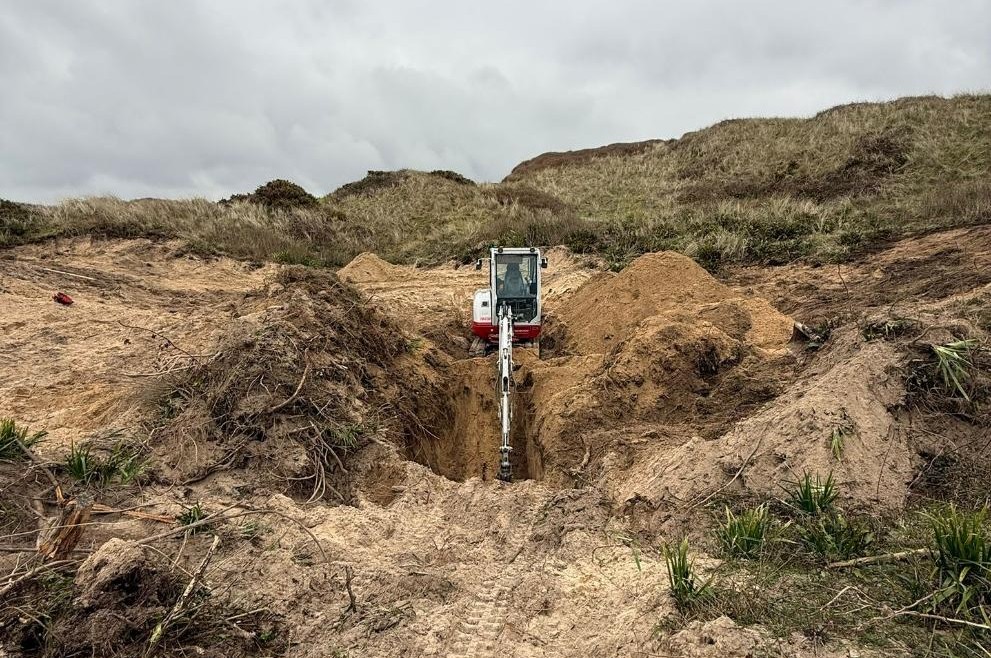
- Scrub Burial
-
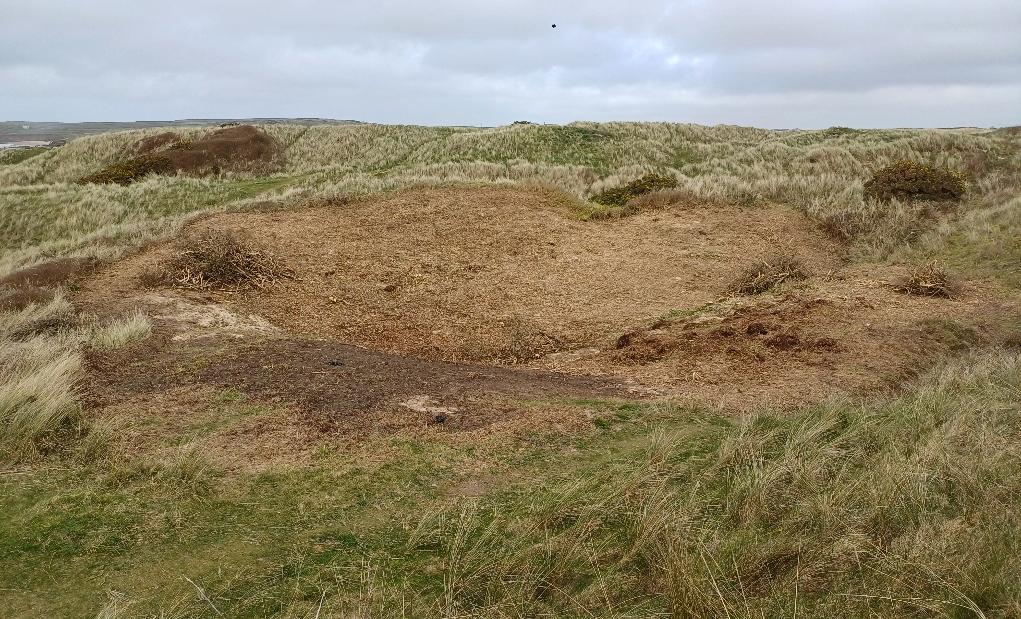
- Before
-
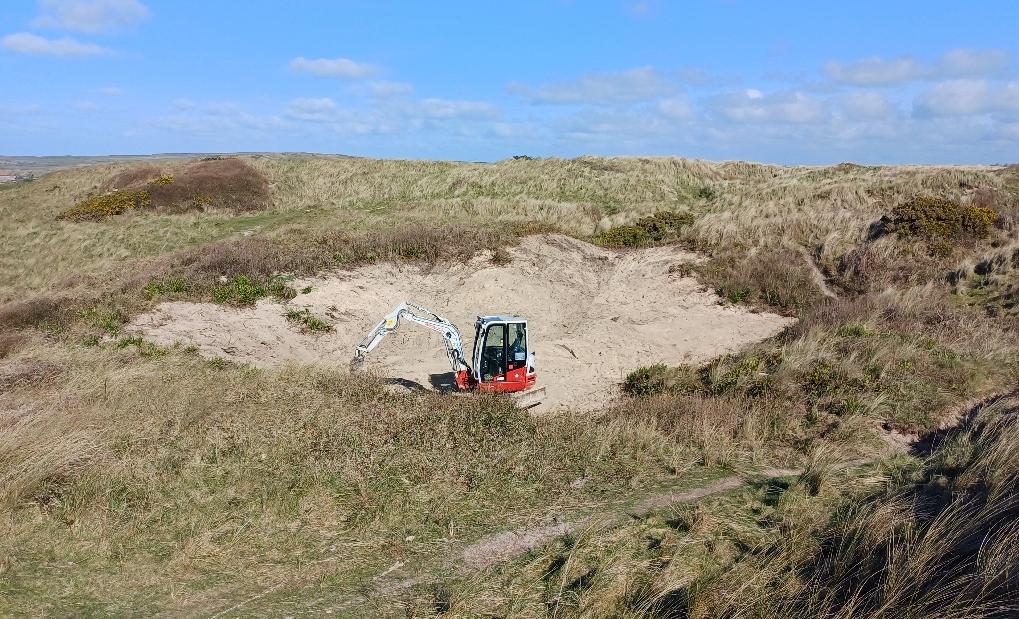
- After
Making Space for Sand News and Events
We like to keep supporters of our project well informed of project progress and developments. We also want to share news of events which are happening and have happened and celebrate coastal community involvement.
Sign up to Making Space for Sand
If you would like to get involved in helping to make dunes more resilient and biodiverse, want to help develop coastal adaptation and emergency plans or just want to know more about what the project is learning about coastal change, please click here: