

Last year, researchers from our project partner University of Plymouth in collaboration with the University of Leicester, took core sand samples from the Penhale dunes and used innovative Optically Stimulated Luminescence (OSL) dating techniques to determine initial ageing of the dune (see our news post on 8th Nov 24). The results found that the top 1 m of the dune field was active, and thus largely unvegetated, over at least the past few hundred years.
Earlier this month, they revisited the Penhale dunes and collected more, and deeper, core samples from across the dune field to work out when the dunes actually formed. In addition, they used geophysical techniques to determine how thick the sand cover is across the dune field.
Some of the core samples were 6 meters deep and encompassed the complete dune deposit and terminated on an ancient soil surface. This means that when the samples are analysed, it will be possible to exactly pinpoint when the dune was first formed. However, the analysis process takes some time so we may need to wait until the Autumn to find out the results.
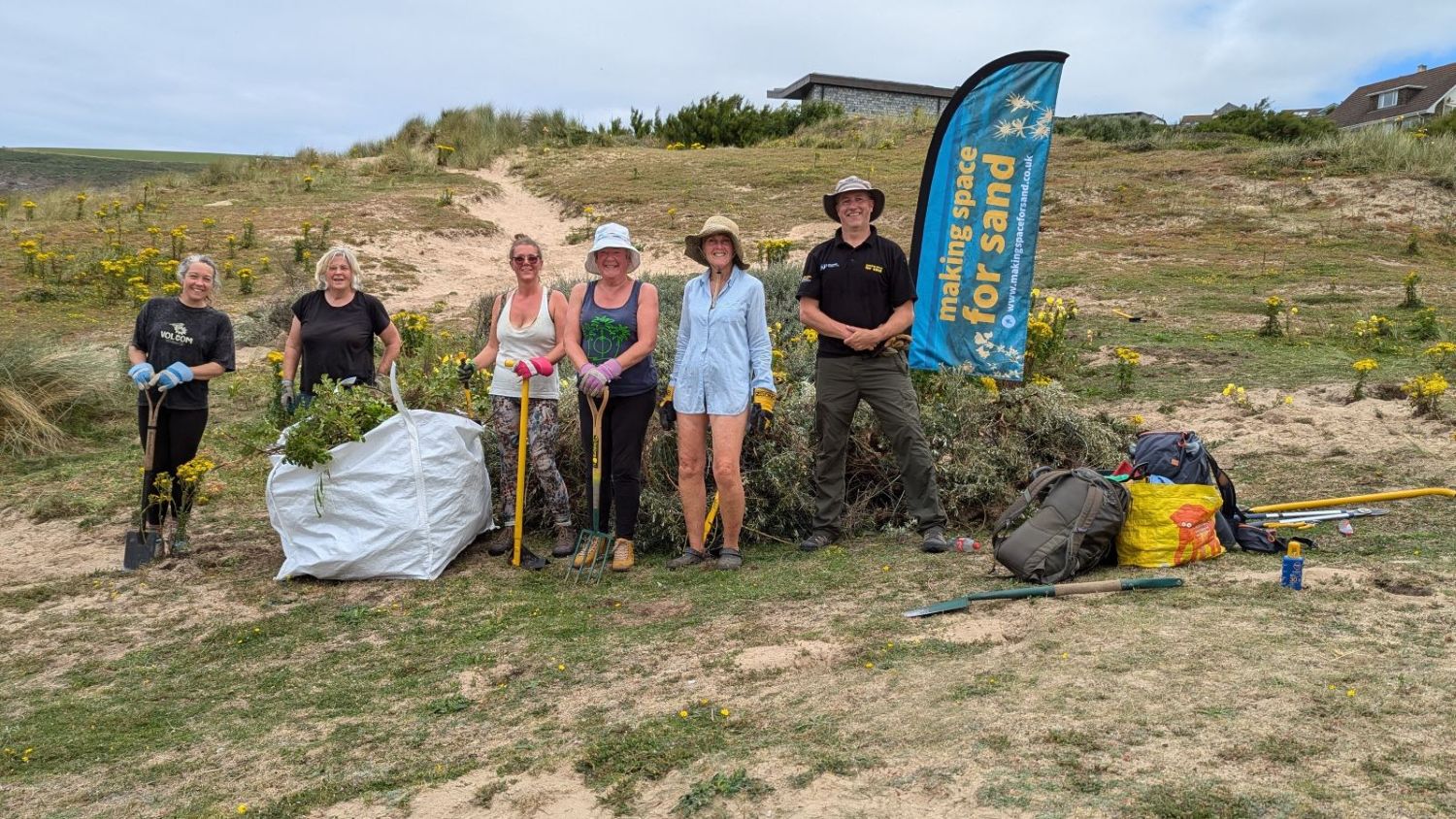
The photo shows a 6-m long corer in the left of the picture and this corer was used to collect sand samples from the core location to the right near the group of people. The information gathered from these sand samples will help us to understand when, and under what conditions, the Penhale dunes formed. In turn, this information will contribute to our understanding how the dunes will develop in the future.

Dune Core Sampling


Making Space for Sand News and Events
We like to keep supporters of our project well informed of project progress and developments. We also want to share news of events which are happening and have happened and celebrate coastal community involvement.
Sign up to Making Space for Sand
If you would like to get involved in helping to make dunes more resilient and biodiverse, want to help develop coastal adaptation and emergency plans or just want to know more about what the project is learning about coastal change, please click here: