

The research team at the University of Plymouth have published a new scientific paper in Marine Geology scientific journal entitled “Sediment characteristics, distribution and pathways on a macro-tidal, energetic and sediment-limited embayed coast.” This is available to the public – please click the link below.
The research shows that coastal change is not driven by waves and tides alone but by the amount of sand available — and how it is transferred between neighbouring bays — plays a crucial role. It also reveals that headland shape plays a key role in either blocking or allowing this movement between embayments.
The study found that in areas where sand supply is limited, beaches often contain coarser sand with higher carbonate content. This type of material is commonly linked to offshore reefs, highlighting the role of offshore sediment sources in shaping the coast.
This work highlights the importance of considering where sand comes from and how it moves around the coast to improve our predictions of future coastal change.
Please click on the link below to access the paper:
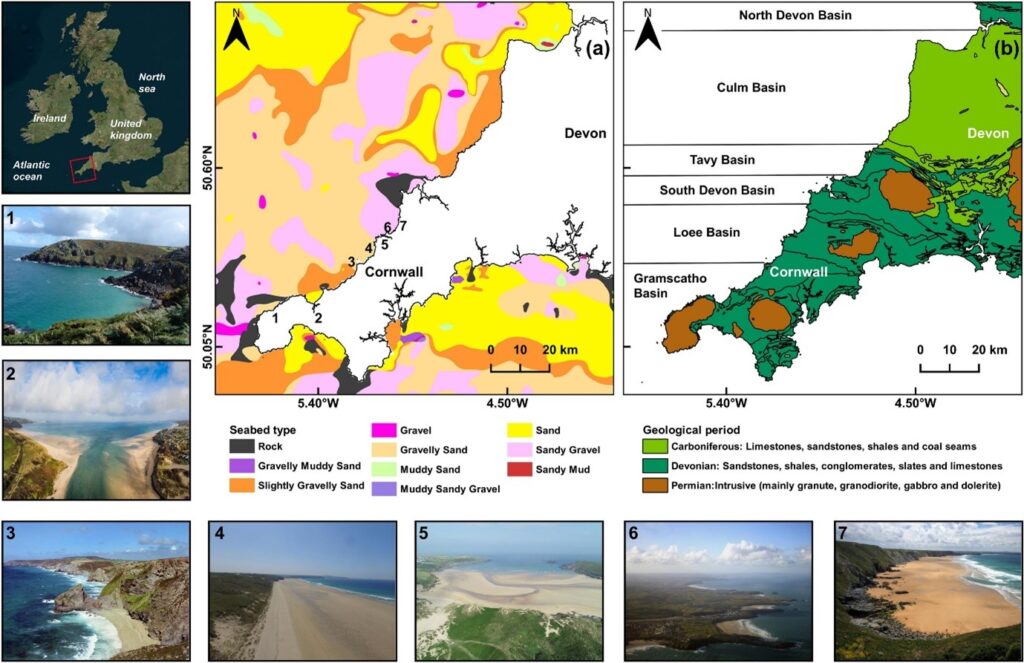
The visual above shows hows (a) offshore seabed sediment distribution and (b) geological setting of the Southwest and includes examples of the most common types of coastline found along the north coast of Cornwall: (1) Travean cliff ; (2) Hayle estuary; (3) St Agnes; (4) Penhale; (5) Crantock; (6) Newquay and (7) Watergate Bay.


Making Space for Sand News and Events
We like to keep supporters of our project well informed of project progress and developments. We also want to share news of events which are happening and have happened and celebrate coastal community involvement.

Sign up to Making Space for Sand
If you would like to get involved in helping to make dunes more resilient and biodiverse, want to help develop coastal adaptation and emergency plans or just want to know more about what the project is learning about coastal change, please click here: