
Ponies are playing a vital role in preserving the rich dune grasslands of the Towans, the stretch of coastal habitat running from Hayle to Godrevy. Managed grazing of this habitat allows a rich mix of wildflowers to grow, including those specific to dune habitats such as Lady’s Bedstraw and Pyramidal orchids.
Without intervention these flowers can become smothered by coarse grass and scrub. Brush cutting can help but it is no substitute for the unique contribution which ponies can provide to further biodiversity in these special sand dune habitats.
The ponies also break up the ground with their hooves creating open patches enabling a wider range of wildflowers to grow. They help curb the spread of scrub by feeding on the brambles and woody plants providing a more balanced ecosystem.
The ponies’ health and welfare are the responsibility of the grazier who will install temporary electric fencing to limit the movement of ponies around a site and avoiding over- grazing. He also trains volunteers from Friends of the Towans who check the ponies’ well-being on a daily basis.
The Towans have been grazed since 2012, and specifically on Gwithian Green since 2021. The grazing has mainly been dependent on funding from the Countryside Steward schemes (CSS) and a variety of other sources. However, funds for Gwithian Green have been very limited so MS4S has offered to support the grazing programme at this location for the last 3 years allowing it to continue. This form of scrub control has been very successful, and the project has been delighted to enable it to keep going.
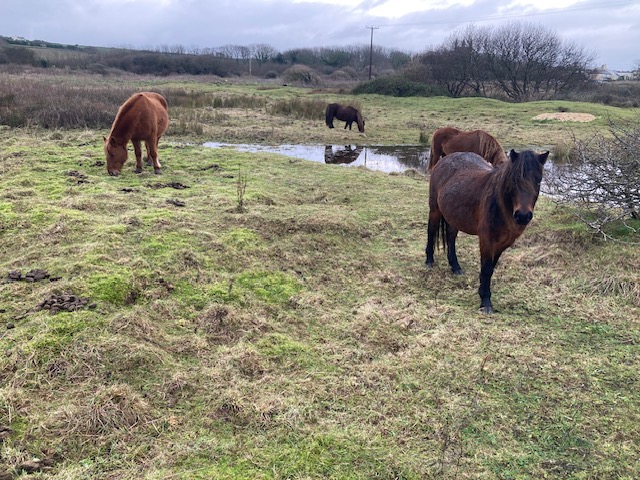
Ponies on Gwithian Green

Making Space for Sand News and Events
We like to keep supporters of our project well informed of project progress and developments. We also want to share news of events which are happening and have happened and celebrate coastal community involvement.
Sign up to Making Space for Sand
If you would like to get involved in helping to make dunes more resilient and biodiverse, want to help develop coastal adaptation and emergency plans or just want to know more about what the project is learning about coastal change, please click here: