

In the last couple of months MS4S has supported scrub clearance up on Penhale dunes. Jon Cripps, Cornwall Wildlife Trust ranger for the dunes, kindly sent the comment below:
“Blackthorn scrub is a bit of a menace on the dunes at Penhale. From the pictures you can see it spreads and creates a dense monoculture shading out dune flora. It is useful for nesting birds and reptiles to hide in, so we don’t want to eradicate it all, but a level of control is required.
We try to control scrub on Penhale with grazing cattle, ponies and in some area’s goats, but once the blackthorn gets to this level grazers have little impact. Therefore, the only way to go is either cut or dig up blackthorn (the site is organic, so herbicide treatment isn’t an option, and it’s not one we like anyway).
The dunes are covered in historic features beneath the vegetation so it’s not always possible to dig up scrub. For this reason, the roboflail was selected to cut scrub. It has low ground pressure tracks so causes little damage to the surface features. The operator can also use it from a safe distance, which is much more desirable on undulating steep dune.
The areas we cut are within grazed parts of the dunes. Now the areas are opened up to grazing it is hoped the cattle and ponies will trample the areas and graze any low growth helping to stop the blackthorn coming straight back.
We managed to cut nearly 2ha across the dunes this winter. This is a great outcome and should make a positive difference to dune flora particularly with follow up grazing from our MS4S funded Exmoor ponies.”
-
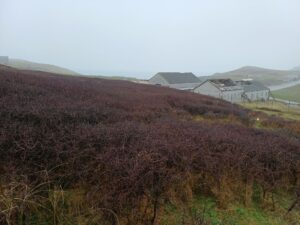
- Penhale Scrub Overgrown
-
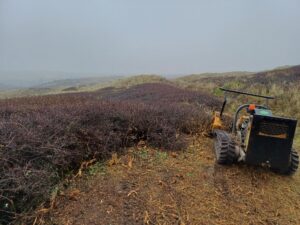
- Penhale Scrub Mechanical Clearance
-
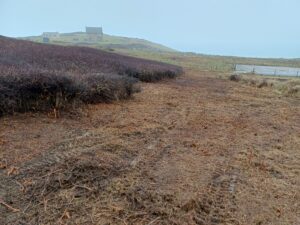
- Penhale Scrub Swath of Cleared Scrub


Making Space for Sand News and Events
We like to keep supporters of our project well informed of project progress and developments. We also want to share news of events which are happening and have happened and celebrate coastal community involvement.
Sign up to Making Space for Sand
If you would like to get involved in helping to make dunes more resilient and biodiverse, want to help develop coastal adaptation and emergency plans or just want to know more about what the project is learning about coastal change, please click here: