

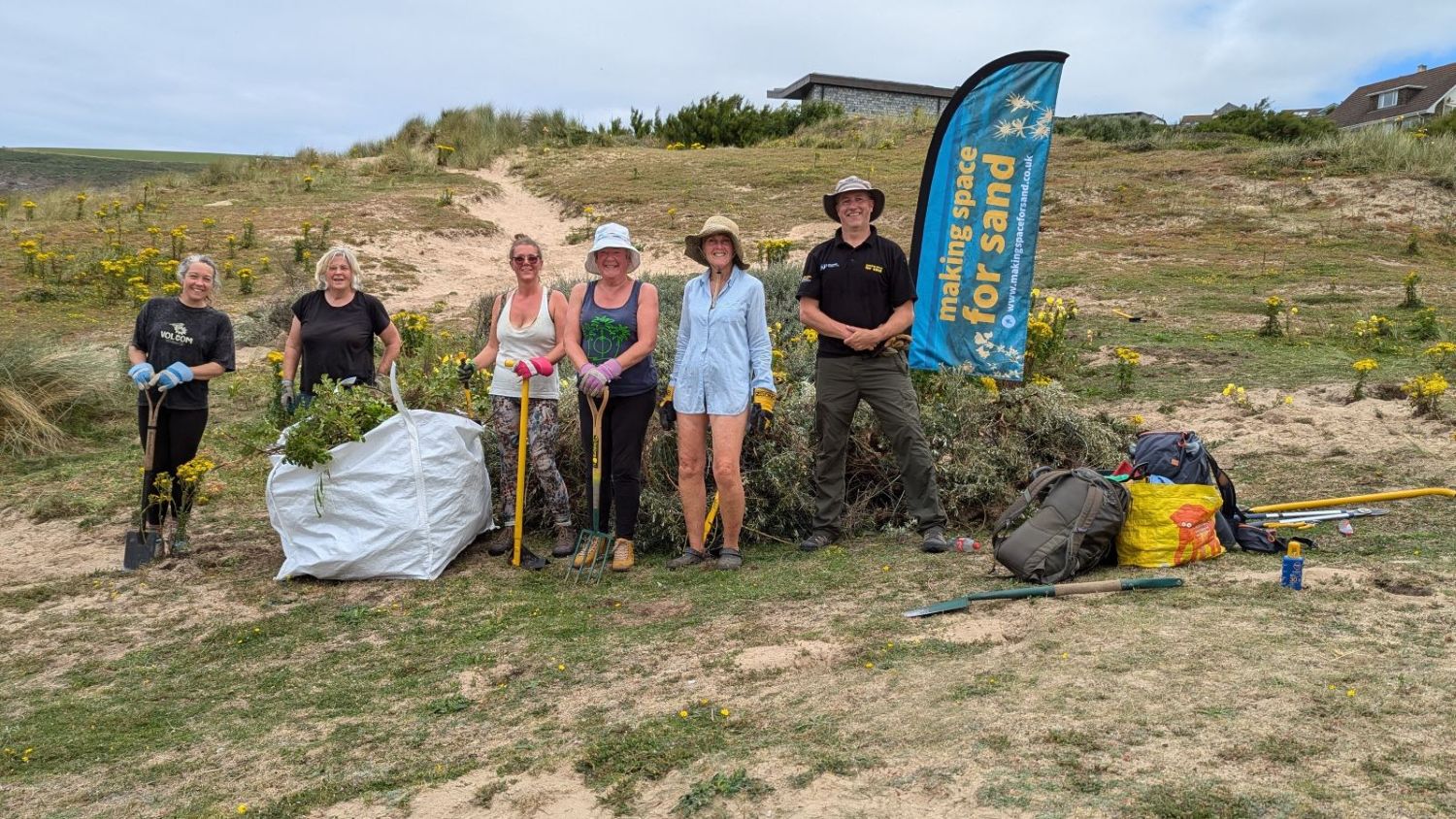
The dunes at Mawgan Porth are beautiful, but suffering from large amounts of invasive species of plants, such as Japanese rose and sea buckthorn (see the newly published ecological report on Mawgan Porth dunes). Because of this, Andy Nelson MS4S Community Engagement Officer working through partner Cornwall Wildlife Trust, has been supporting and local ‘community champion’ Sarah Ferry recently, to start volunteer work to improve the condition of the Mawgan Porth dunes.
Most invasive plants in the dunes are garden escapes, which arrive either by being dumped in garden waste or by seeds arriving from gardens via animals or the wind. When they take hold in sand dunes they will often out-compete native dune plants, which may then die. Japanese rose can be particularly problematic in sand dunes, where it can blanket huge areas; this is an issue at Mawgan Porth, where it covers a large proportion of the dunes, with few other plants growing amongst it.
The volunteers focussed on the removal of Japanese rose (and sea buckthorn) from an area that is yet to be smothered by these plants, before they become a problem. This area currently has several native species and evidence of rabbits, which are good for the dunes. After a good first session, the volunteers had removed many of the smaller invasive plants here (the bigger/bushier plants can wait until bird nesting season is over). Thanks to everyone who turned out and special thanks to Ray for also providing snacks!
If you want to know more about this volunteer work or want to help out next time, please contact andy.nelson@cornwallwildlifetrust.org.uk
-
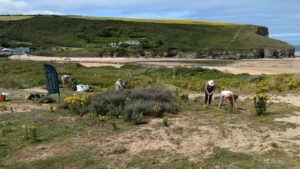
- Invasives Removal Mawgan Porth
-
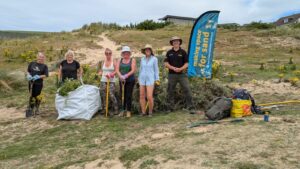
- Volunteers at work on Mawgan Porth Dunes


Making Space for Sand News and Events
We like to keep supporters of our project well informed of project progress and developments. We also want to share news of events which are happening and have happened and celebrate coastal community involvement.
Sign up to Making Space for Sand
If you would like to get involved in helping to make dunes more resilient and biodiverse, want to help develop coastal adaptation and emergency plans or just want to know more about what the project is learning about coastal change, please click here: