

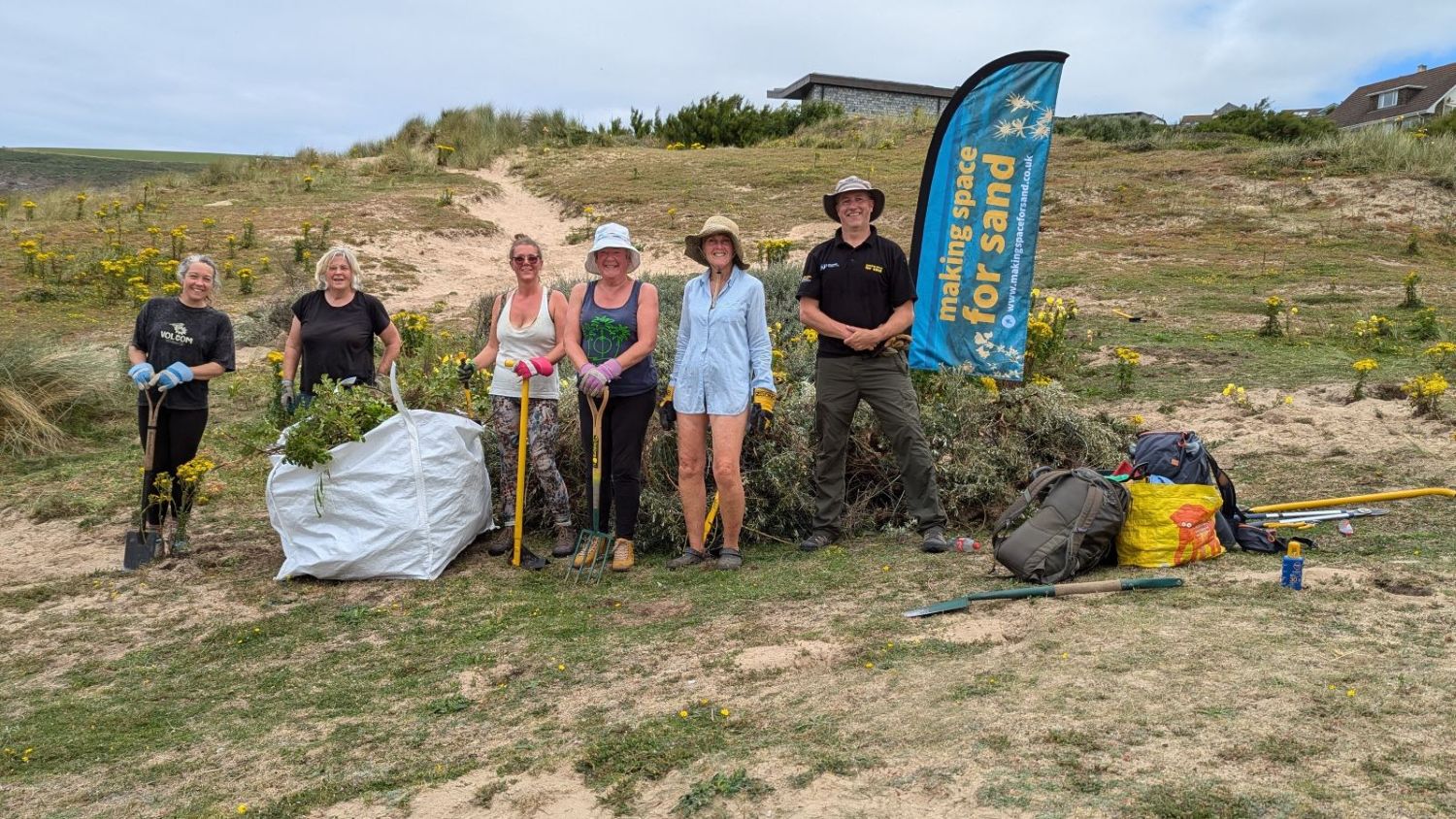
Making Space for Sand project staff recently joined staff and volunteers from The National Trust to do some dune management work at Crantock.
As with all coastal dune systems, the dunes at Crantock are a dynamic environment, that has always and will always continue to shift and change over time. However, recent years have seen some dramatic changes to Crantock’s dunes, creating very steep slopes as the dunes have rapidly eroded. Although these changes are part of an ongoing, natural, process, the speed and severity at which this is occurring is creating problems for dune managers. Future predictions are for more erosion at this location as illustrated in the NCERM mapping on the MS4S page: Crantock – Making Space for sand.
The willing volunteers transplanted marram grass from areas where it is dense to an area where the dunes are rapidly eroding and people have been using a steep and potentially dangerous slope. Marram grass fixes sand where it grows, so the hope is that the plants will slow the rate of erosion in this location. Combined with some chestnut fencing, the hope is that site visitors will now avoid this area (there is a better, safer, way to the beach), giving the grass a chance to establish.
The National Trust is also working with other Making Space for Sand project partners, including researchers from the University of Plymouth, to better understand how and why the dunes are changing and better predict what future changes might look like. The creation of a long-term dune management plan can then inform how stakeholders can work together to care for this special place.
-
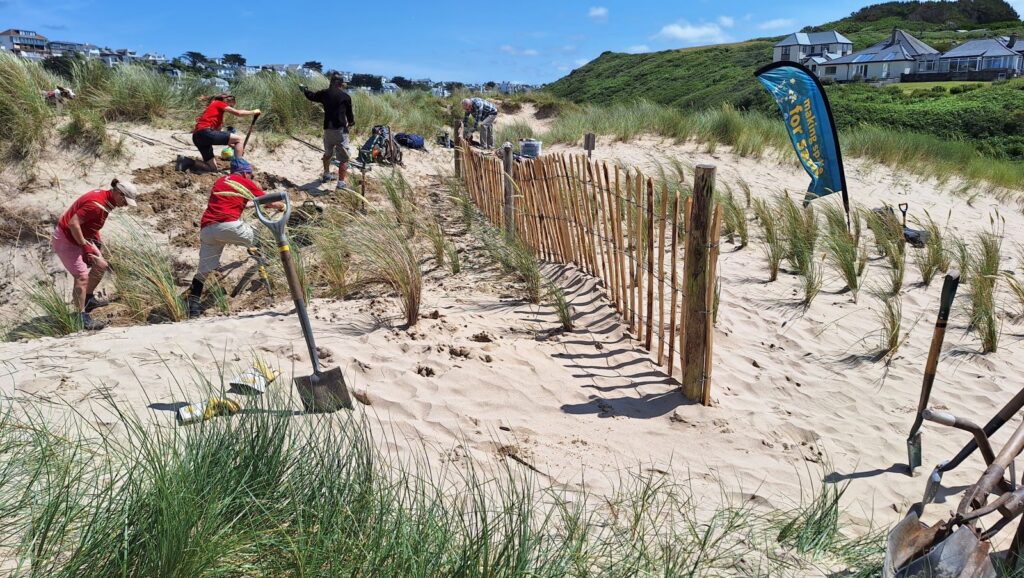
- Volunteers Planting Marram Grass
-
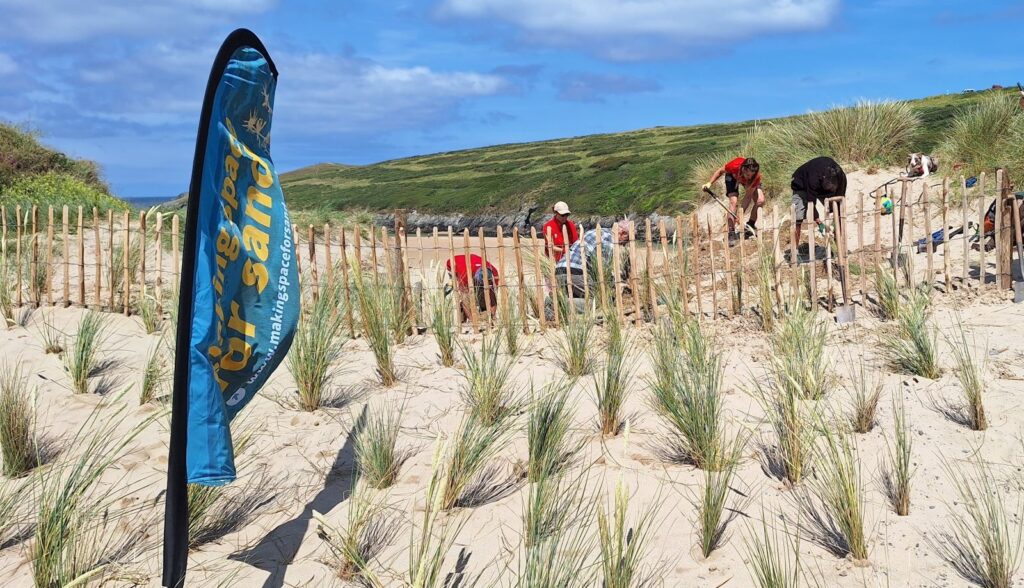
- New Marram Grass Area


Making Space for Sand News and Events
We like to keep supporters of our project well informed of project progress and developments. We also want to share news of events which are happening and have happened and celebrate coastal community involvement.
Sign up to Making Space for Sand
If you would like to get involved in helping to make dunes more resilient and biodiverse, want to help develop coastal adaptation and emergency plans or just want to know more about what the project is learning about coastal change, please click here: